

ACMS Legislative Town Hall Highlights Key Healthcare Policy Issues
By: Sara Hussey, MBA, CAE – ACMS Executive Director
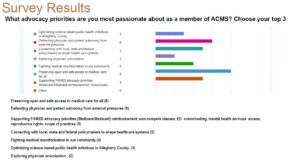
On March 3, ACMS members gathered virtually for a Legislative Town Hall to discuss several policy issues shaping healthcare in Pennsylvania. Maintaining safe and reliable access to medical care remains the top advocacy priority for many physicians. Concerns raised by members also included physician autonomy, Medicare and Medicaid reimbursement, non-compete clauses, and other policy issues that affect both physician practice and patient access to care.
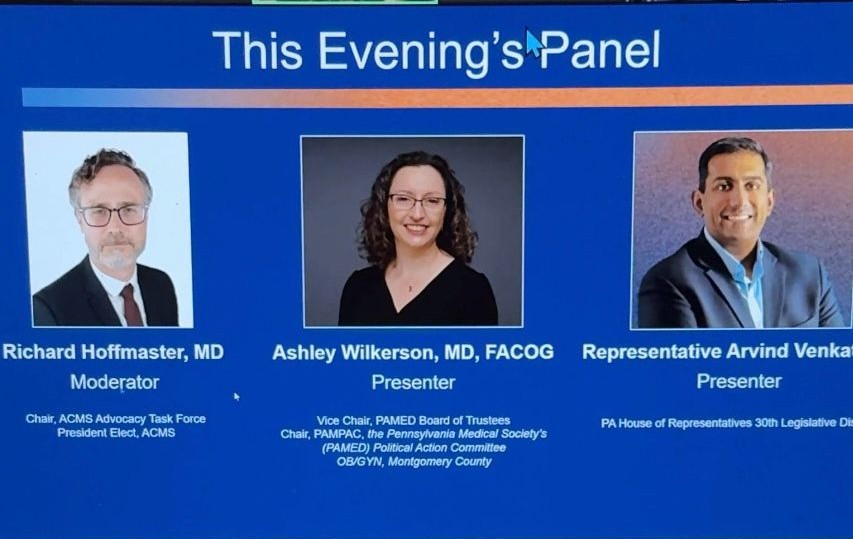
During the discussion, Pennsylvania Representative Dr. Arvind Venkat shared insights into how recent federal policy changes are affecting healthcare coverage in Pennsylvania. With the expiration of enhanced premium tax credits created under the Affordable Care Act, the number of uninsured Pennsylvanians has already begun to increase and is expected to rise further in the coming months. As coverage changes, more individuals are moving into lower-premium Bronze or catastrophic plans, which often carry higher out-of-pocket costs when patients need care.
Potential federal Medicaid changes were also a major topic of discussion. Proposed eligibility verification requirements and work requirements could result in hundreds of thousands of Pennsylvanians losing Medicaid coverage. These changes could have significant impacts on access to care, particularly in rural areas where hospitals and healthcare systems rely heavily on Medicaid reimbursement.
Workforce challenges were another key issue raised during the forum. Physician shortages continue to affect rural communities, and policymakers are exploring strategies such as expanding rural residency training opportunities to help address those gaps. Immigration policy also intersects with workforce concerns, particularly when enforcement policies affect healthcare workers or discourage patients from seeking care.
The growing role of artificial intelligence in healthcare is also beginning to shape legislative discussions. Dr. Venkat discussed House Bill 1925, which aims to establish transparency and oversight when artificial intelligence tools are used in clinical decision-making or utilization review. The legislation would require human oversight while ensuring existing standards around privacy, safety, and anti-discrimination are maintained.
PAMED Board Vice-Chair and Chair of PAMPAC, Dr. Ashley Wilkerson, also highlighted several federal and state policy issues currently under discussion, including Medicare reimbursement reform, prior authorization requirements, maternal health legislation, and private equity oversight in healthcare. She emphasized the importance of PAMPAC and encouraged members to consider making a contribution to support physician advocacy efforts.
The conversation underscored the importance of physician engagement in the policy process. As healthcare policy continues to evolve, sharing frontline experiences and building relationships with policymakers remains essential to ensuring that legislation supports both patient access and the sustainability of medical practice.
ACMS has also recently received updates on several bills that are expected to come before the Pennsylvania House Health Committee later this month. Members are encouraged to review these proposals and share any comments or concerns with ACMS (via Sara Hussey at shussey@acms.org). Depending on member feedback, ACMS may consider submitting formal comments. Members are also welcome to submit comments directly as individuals.
Bills currently under discussion include:
• House Bill 2254: Requiring healthcare facilities, nursing homes, and assisted living residences to permit terminally ill medical marijuana patients to use prescribed medical marijuana while in the facility.
• House Bill 2265: Requiring hospital emergency departments to be staffed at all times by a board-certified or board-eligible emergency physician.
• House Bill 1077: Addressing continuity of care for students who fail school vision screenings.
ACMS will continue to monitor these proposals and other emerging policy issues and will keep members informed as discussions progress. Physician voices remain critical in shaping policies that affect patient care and the future of the medical profession in Pennsylvania.