

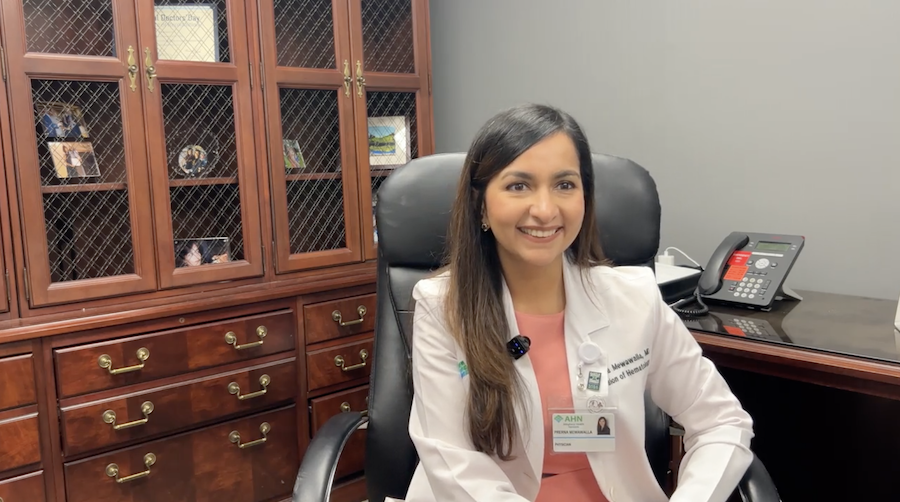
Prerna Mewawalla, MD, serves as Director of Stem Cell Transplant and Cellular Therapy within the Division of Hematology and Cellular Therapy at Allegheny Health Network, specializing in hematology and cellular therapy and making a profound impact on patients facing complex blood disorders such as multiple myeloma and amyloidosis. When she began medical school, she intended to pursue surgery, until an unexpected experience changed her path.
“In my final year of medical school, my mom was diagnosed with multiple myeloma,” said Dr. Mewawalla, who is also Chair of the ACMS Women Physicians committee and an ACMS board member. “It was a different time for myeloma. The survival of myeloma wasn’t great; it was just a few years.”
Myeloma treatment plans have come a long way since then, but most of the treatments available to patients today were not available 20 years ago.
“It was so different being on the other side as a family member, as a caregiver, watching my mom go through it,” she said. “That’s when I realized that if there is something I want to do, it is for multiple myeloma and it is for blood cancers.”
As a hematologist-oncologist, Dr. Mewawalla now works at the AHN Cancer Institute, aiding in trials and experiments where the term “cure” is being considered to describe certain treatment methods.
“I understand that when patients walk through the door, and they walk into the cancer institute, even to read the word ‘cancer’ is scary,” she said. “I think it’s so important to understand where the patient is, what they are thinking of, and really help them through the journey because it’s not easy for anyone to hear the words you have cancer.”
Hematologists do not only deal with blood cancer disorders. In hematology, there are traditionally two branches: classical hematologists, who handle benign blood disorders like anemia, and malignant hematologists, who deal with cancers and stem cell transplants.
“The key is to get your annual routine blood work because there are so many things which can be picked up on, so it’s important to stay on top of it,” Dr. Mewawalla said.