

Contributed by: Leah Pope, MPH – Allegheny County Health Department
Each year, around two thousand people in Allegheny County are bitten by an animal, with more bites occurring during the summer months. While rabies infections in humans are rare, they are a serious public health concern. Before 1960, hundreds of people in the U.S. died as a result of rabies infections. Increases in the number of vaccinated pets, availability of rabies-related medical care (post-exposure prophylaxis or PEP), and public health surveillance and intervention have helped to decrease the impact of rabies in the community.
Animal bites are a reportable condition. The Allegheny County Health Department (ACHD) follows up with bite victims and animal owners to assess the risk of rabies and offer guidance. In 2025, preliminary data show that ACHD received 1,846 animal bite reports. The majority (90%) of these bites were inflicted by pets that people owned. Bites from wild animals, like bats, raccoons, groundhogs, or stray and feral dogs and cats, accounted for 6 percent of all bites in 2025.
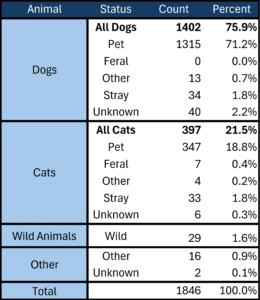
In the U.S., around 4,000 animal rabies cases are reported each year. The ACHD Public Health Laboratory conducts animal testing when the risk of rabies is high. Of 429 animals tested in 2025, seventeen (4%) were positive for rabies. Of the positive tests, 11 (79%) were bats, three (21%) were raccoons, and three (21%) were cats.
Healthcare providers in Allegheny County are crucial public health partners and can help reduce the risk of human rabies infections. If a patient presents with complaints of an animal bite, scratch, or exposure, and the animal is not available for quarantine or testing, rabies post-exposure prophylaxis (PEP) may be indicated.
Rabies PEP consists of one dose of human rabies immune globulin (HRIG) and four doses of rabies vaccines administered on days 0, 3, 7, and 14. For those with immune disorders, a fifth dose should be administered on day 28. When administering HRIG, providers should infiltrate the wound(s) with a full dose. Any remaining volume should be administered intramuscularly in a site distant from vaccine. HRIG should not be administered in the same site as the vaccine or in the gluteal area (unless the bite wound is in the gluteus).
All animal bites should be reported to ACHD. The link to the online reporting form can be found here.

Leah Pope, MPH, is an Applied Epidemiologist with the Infectious Disease Epidemiology Program at the Allegheny County Health Department. At ACHD, Leah assesses school immunization coverage, conducts animal bite surveillance, develops vaccine preventable disease surveillance dashboards and reports, and provides infectious disease outbreak support. She has previous experience in chronic disease and HIV/STI prevention.