

By: Sara Hussey, MBA, CAE – ACMS Executive Director
Pharmacy benefit managers (PBMs) may operate largely behind the scenes of health care, but their decisions can have very visible consequences for physicians and their patients.
PBMs administer prescription drug benefits on behalf of health insurers and employers. Their responsibilities can include negotiating drug rebates, managing formularies and pharmacy networks, processing claims, setting pharmacy reimbursement pricing and administering other aspects of prescription drug coverage.
A new analysis from the American Medical Association (AMA) shows that the companies performing these functions are becoming increasingly concentrated.
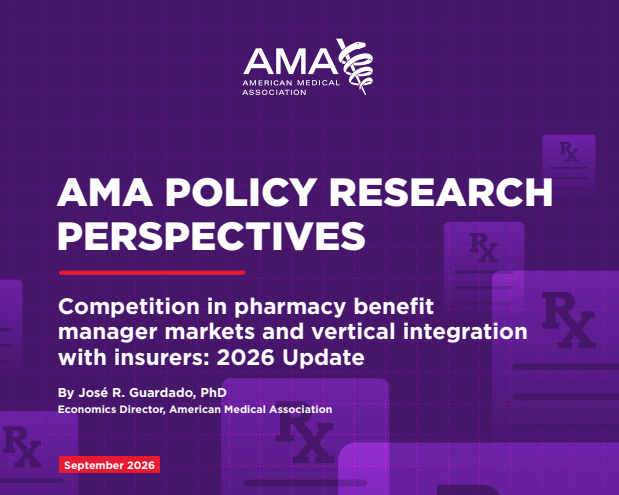
The AMA’s new Policy Research Perspective, Competition in Pharmacy Benefit Manager Markets and Vertical Integration with Insurers: 2026 Update, examines PBM and prescription drug plan markets using 2024 data. The findings show that the four largest PBMs controlled 75% of the national PBM market in 2024, up from 70% in 2022.
Based on the AMA’s analysis of plan enrollment, the largest PBMs were OptumRx and Express Scripts, each with approximately 23% of the national market, followed by CVS/Caremark at 18% and Prime Therapeutics at 11%. Because the AMA measures market share by enrollment rather than by prescription claims, its figures may differ from other industry estimates.
At the regional level, the AMA found that 94% of PBM markets (32 of the nation’s 34 federal prescription drug plan regions) were highly concentrated in 2024, compared with 82% in 2022.
Read the AMA’s 2026 PBM market analysis.
The study also highlights the extent of vertical integration between PBMs and health insurers. Each of the nation’s 10 largest PBMs shares ownership with a health insurer. In 2024, 69% of people represented in the study’s prescription drug plan data were covered by an insurer vertically integrated with a PBM.
Why Should Physicians Care?
For physicians, PBM policy is not simply an issue of corporate structure or prescription drug economics. PBMs can influence which medications are covered, pharmacy networks and other aspects of how prescription drug benefits are administered.
That means decisions made by PBMs can eventually show up in the exam room.
A physician may determine that a particular medication is most appropriate for a patient, only to learn that coverage restrictions or pharmacy requirements create additional hurdles. Physicians and their practice teams may then spend additional time helping patients navigate their prescription drug coverage or identifying accessible alternatives.
For patients, prescription coverage and affordability can also determine whether a treatment plan developed with their physician is actually accessible.
The AMA notes that limited competition in PBM markets could potentially result in higher prices paid by insurers for PBM services, higher premiums, reduced pass-through of rebates and lower pharmacy reimbursement. Importantly, the AMA analysis primarily documents the structure and concentration of the PBM market; market concentration alone does not establish that a particular PBM practice caused higher costs or reduced access for an individual patient.
What the findings do provide is additional information for physicians, patients and policymakers as they consider how competition, transparency and accountability within the prescription drug system can affect access and affordability.
Bringing the Issue Home to Pennsylvania
The national trends identified by the AMA are particularly timely in Pennsylvania, where policymakers and regulators have already begun taking a closer look at the role PBMs play in prescription drug access and affordability.
Pennsylvania’s Pharmacy Benefit Reform Act, or Act 77 of 2024, expanded the Pennsylvania Insurance Department’s regulatory authority over PBMs and established new requirements involving transparency, pharmacy network adequacy and certain PBM business practices.
Learn more about Pennsylvania’s Pharmacy Benefit Reform Act.
Those requirements are especially relevant now. Beginning in 2026, registered PBMs are required to submit annual network adequacy reports to the Pennsylvania Insurance Department. They must also submit annual transparency reports containing information about rebates, administrative fees, retained rebates and reimbursements involving affiliated entities.
The Pennsylvania Insurance Department has posted the PBM network adequacy reports and, in August 2026, published its first annual PBM transparency report, which presents the PBM data in aggregated, de-identified form.
View Pennsylvania’s PBM reports and research.
Pennsylvania also released its Act 77 PBM Impact Study in May 2026. The analysis examined data from five PBMs (Caremark, Express Scripts, Navitus, OptumRx and Prime Therapeutics) in Pennsylvania’s fully insured commercial market and evaluated issues including pharmacy reimbursement, steering and spread pricing.
The study is an important piece of the local conversation, but its scope should also be kept in perspective: it examined Pennsylvania’s fully insured commercial market, which represents approximately 24% of the state’s overall health care market. Act 77’s consumer protections similarly apply to fully insured health benefit plans rather than every type of health coverage.
Read Pennsylvania’s 2026 PBM Impact Study.
The Commonwealth has also established a complaint process for pharmacies to raise concerns involving issues such as network adequacy, reimbursements, steering, rebates, clawbacks and specialty drug classifications.
These issues have particular resonance in Western Pennsylvania, where physicians regularly see the practical consequences when patients encounter difficulty obtaining prescribed medications or accessing convenient pharmacy services. For physicians, the central question is ultimately a clinical one:
Can patients obtain the medication their physician prescribed, at a pharmacy they can reasonably access, at a cost they can afford and without unnecessary delays or administrative barriers?
A Broader Conversation About Consolidation in Health Care
The AMA’s findings also contribute to a much larger conversation about competition and consolidation throughout the health care system.
PBMs represent only one piece of an increasingly interconnected health care marketplace. The extensive vertical integration identified by the AMA, in which PBMs and health insurers share ownership, raises important questions about competition, transparency and the incentives that exist throughout the prescription drug supply chain.
For ACMS members, this conversation intersects with issues that are central to the practice of medicine: access to care, physician autonomy, administrative burden and the ability of physicians and patients to make treatment decisions based on clinical needs.
As Pennsylvania’s new reporting requirements generate additional information about PBM practices within the Commonwealth, physicians will have an opportunity to better understand a system that can significantly influence what happens between the prescription written in the exam room and the medication ultimately reaching the patient.
Additional Resources
- AMA: Competition in Health Care Research
- AMA: PBM Market Concentration Continues to Rise
- Pennsylvania Insurance Department: Pharmacy Benefit Reform Act (Act 77)
- Pennsylvania Insurance Department: PBM Reports
- Pennsylvania Insurance Department: 2026 PBM Impact Study
Transparency Note: Artificial intelligence (AI) was used to assist with organizing and structuring this blog post. The content and source materials were reviewed and edited by ACMS staff prior to publication.