


By: Sara Hussey, MBA, CAE – ACMS Executive Director
I recently returned from the AMA Annual Meeting in Chicago, where I represented ACMS alongside ACMS members Holly Appleberry, DO and Donald Bourne, MD, PhD, for several days of policy debate, elections, and advocacy strategy. Here’s the fast version – what happened, and why it matters to your practice.
Leadership
Willie Underwood III, MD, was sworn in as AMA’s 181st president. Sandra Adamson Fryhofer, MD, was elected president-elect and takes over next June. The proud Pennsylvania moment: Marilyn J. Heine, MD, an emergency medicine/hem-onc physician from our state, was named chair-elect of the AMA Board of Trustees. I’ve had the chance to interact with Dr. Heine a few times now, and I know she’d welcome hearing from ACMS physicians directly. https://www.linkedin.com/in/marilyn-heine-md-5788214b/
AI Can’t Be the Final Word on Your Patients’ Care
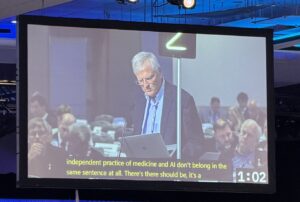
The House adopted policy requiring AI-driven coverage decisions to be evidence-based and physician-reviewed, explicitly rejecting autonomous AI as a substitute for physician judgment. Feels like a no-brainer, but having it as formal policy is still the right step. Any AI-informed denial must now be appealable and reviewed by a physician in the same specialty, licensed in-state, with no financial incentive to deny. The next AI-generated denial you fight now has real AMA policy behind your appeal.
Insurers Are Being Called Out — By Name, By Dollar Amount
President Mukkamala didn’t pull punches: insurers promised prior auth reform last year, and physicians have seen almost no follow-through. The House responded by directing the AMA to investigate and publicize how much insurers actually profit by delaying care and payment through prior authorization.
Corporate Medicine Guidance Gets Specific
The AMA adopted its most specific corporate-practice-of-medicine guidance yet, affirming physician ownership and independent judgment, and opposing contracts that let non-licensed entities control medical practices.
“Physician,” Not “Provider”
The House pushed the AMA to advocate harder for the term “physician” over the catch-all “provider,” citing harm to patient understanding and professional accountability. This exact language fight is happening in Harrisburg right now on scope-of-practice bills.
The Data That Undercuts the Scope-Creep Argument
At the AMA’s Scope of Practice Summit, a closed-door session for state and specialty society leaders that I attended, the sharpest data point of the week came out of Florida. A 2020 law let NPs practice without physician supervision, but only within primary care. New research shows nearly 60% of Florida NPs are practicing somewhere else entirely … most commonly cosmetic/non-standard medical practices, emergency/urgent care, inpatient medicine, and cardiology.
The researchers’ conclusion: strong evidence of NPs practicing well outside their legal scope, and their recommendation was stricter enforcement, not more flexibility. Next time “loosen supervision to fix access” comes up in Harrisburg, this is the data to have ready.
Medicaid: Not Abstract for Us
Nearly three-quarters of state medical societies named Medicaid their top 2026 priority, as the One Big Beautiful Bill Act brings funding cuts that the AMA says will worsen patient access. Western PA’s Medicaid-dependent population and safety-net facilities will feel this directly. If you’re seeing the impact in your own practice, share that information with ACMS leadership. We need those stories for advocacy, and it’s something the ACMS Advocacy Task Force is already digging into.
Burnout Still Matters
Nearly 40% of medical societies flagged physician burnout as a top priority, with a push to strip inappropriate mental health questions from licensing applications, something we’ve already tackled here in Pennsylvania.
Final thought: AI accountability, insurer transparency, corporate medicine limits, and hard data against scope creep all emerged as the big topic areas this year. Among state and county EDs, there was a lot of conversation around accountability and support from the AMA. We collaborate well in some areas, but we also identified areas where both sides could do better. New AMA CEO Dr. John Whyte shared a real commitment to leaning into more transparency, support, and open conversation going forward.
I’ll keep the membership posted as these policies move into advocacy and legislation. And if you’re interested in serving as a Pennsylvania Delegate to the AMA (meetings in June and November), reach out. The nomination deadline for next year is July 1, but we can always start prepping you for a spot heading into 2028.